A Gulf breeze is part of what makes living in Clearwater enjoyable. But the same breeze that cools your porch can carry tiny droplets of salty water onto your windows. After those droplets dry, salt stays behind, leaving glass that looks hazy even when there is no obvious dirt on it.
Salt exposure is not limited to homes directly on the beach. Wind direction, nearby buildings, landscaping, and how sheltered each window is all affect where airborne salt settles. That helps explain why one side of a Clearwater home may look cloudy while another still looks fairly clear.
How Coastal Salt Becomes a Window Film
Breaking waves and wind put fine sea spray into the air. When that spray reaches your home, it can settle on glass, frames, and screens. The water evaporates, but the dissolved salts remain.
At first, the residue may be difficult to see. You might notice it only when the afternoon sun hits a window at an angle. As more salt collects and mixes with airborne dust and pollen, the surface can develop a grayish haze or scattered spots.
Coastal humidity makes that residue behave differently from ordinary dry dust. Some salts attract moisture from the air, so the deposits can stay damp or become damp again overnight. That moisture helps other particles cling to the surface.
Common clues include:
- A broad haze that becomes more noticeable in low-angle sunlight
- Fine spotting on windows facing prevailing coastal winds
- Glass that looks smeared after a quick wipe
- More buildup on exposed windows than on sheltered ones
These clues suggest coastal residue, but appearance alone cannot confirm what every spot contains.
Why Clearwater Weather Leaves Uneven Results
Clearwater windows deal with more than salt. Throughout Pinellas County, humid mornings, wind-driven rain, irrigation overspray, and shaded landscaping create different conditions around the same house.
During the rainy season, a strong shower may rinse away some loose surface material. It does not reliably wash the whole window. Roof overhangs can shield the upper glass, while runoff from dirty screens or frames can leave streaks below. Wind may also carry fresh coastal spray during unsettled weather.
That is why rain can leave one pane looking better and the next looking worse. Rain is not a substitute for cleaning away the residue already attached to the surface.
Other local conditions add to the mix:
- Humidity: Damp conditions help residue collect dust and remain on surfaces.
- Shade: Moist, shaded frames and nearby surfaces can support algae growth, which requires different attention than salt film on glass.
- Irrigation water: Sprinkler overspray can leave mineral deposits that resemble coastal spotting but may not come off with routine cleaning.
- Sheltered areas: Windows under deep eaves may receive less natural rinsing, even during heavy summer rain.
Rather than assuming every mark is salt, it helps to consider what reaches that particular window.
What to Do When You Notice a Salty Haze
Start with a simple comparison. Look through the window in daylight, then check whether the haze is on the indoor or outdoor surface. If cloudiness appears trapped between the panes, exterior cleaning will not resolve it; a window professional may need to evaluate the insulated glass unit.
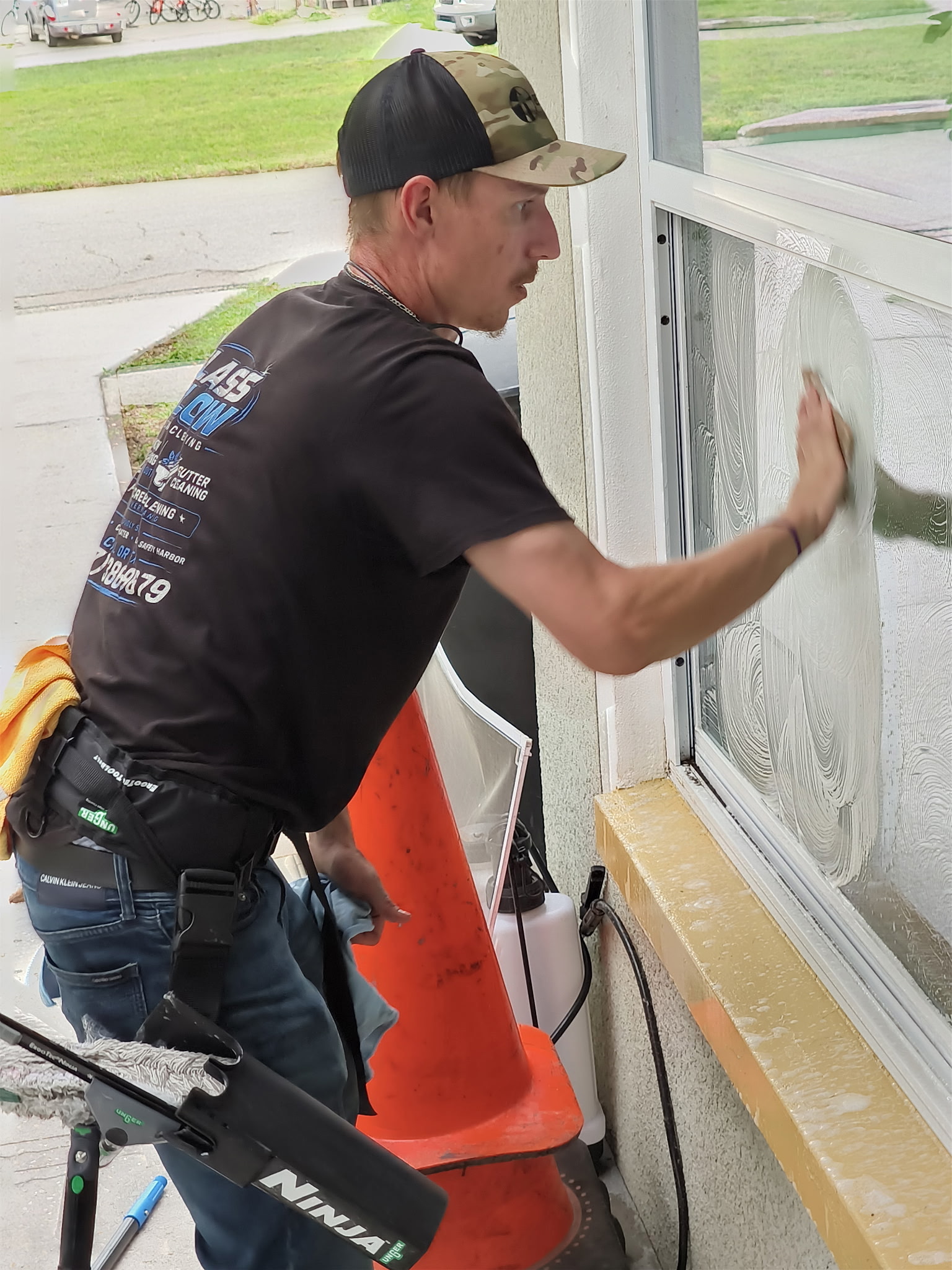
For accessible exterior glass, avoid rubbing a dry, dusty surface. Salt residue can be mixed with gritty particles, and dragging those particles across the glass can cause scratches. Use the window manufacturer's cleaning guidance, including any restrictions for coatings, tint, frames, or hardware.
A few practical precautions make sense:
- Do not scrape unknown deposits with a razor blade.
- Avoid abrasive pads and improvised chemical mixtures.
- Do not aim a pressure washer at windows, seals, or frame joints.
- Keep sprinklers directed away from the house where possible.
- Leave high windows and awkward access points to a properly equipped professional.
Professional window cleaning should address the residue actually present, not just spread it around. Tell your cleaner which windows face the water, which receive sprinkler spray, and where spots persist after cleaning. That information helps distinguish removable surface film from deposits or damage that need separate evaluation.
Routine cleaning and specialty stain treatment are not interchangeable. Specialty stains, including rust, oil, irrigation staining, paint, and oxidation, are quoted separately.
Get a Clearer View of Your Clearwater Home
Coastal window haze is not always one problem with one cause. Salt may be the main ingredient, but humidity, rain patterns, and irrigation can change what is left on your glass.
Glass Glow Window Pros is a family-owned, faith-driven company serving Clearwater and surrounding Pinellas County communities. We take a straightforward approach: assess the buildup, explain the cleaning scope, and identify anything that needs separate attention.
Get an instant quote, or call or text to discuss your windows and the coastal conditions around your home.