A driveway does not get dirty all at once. You might notice a dark edge beside the lawn, a slick spot near the garage, or a strip beneath your parked car that looks different from everything around it. Over time, those small changes can become easy to overlook.
For homeowners in St. Petersburg, outdoor surfaces face a steady mix of humidity, afternoon rain, irrigation overspray, and windblown debris. Salt air is part of our Gulf Coast environment, but it is not the explanation for every driveway stain. Shade, moisture, and organic buildup often tell you more about what needs attention.
Here are five practical signs that your driveway may be ready for professional pressure washing, along with a few clues that call for a separate treatment.
1. The Driveway Feels Slippery When Wet
A driveway can need cleaning before it looks especially dirty. If a shaded section feels slick after rain or a sprinkler cycle, algae or other organic growth may be building up on the surface.
In St. Petersburg, warm temperatures and humid conditions give that growth plenty of opportunity. Areas beside dense landscaping or under a broad tree canopy may stay damp longer than the middle of the driveway.
Pay attention to places you already cross during your normal routine:
- The path from your car door to the house
- The edge beside a regularly watered planting bed
- Shaded areas near the garage or side gate
- Low spots where water lingers after a storm
Do not deliberately walk across a wet patch to test it. If you have already noticed uncertain footing, mention the location when requesting cleaning. Removing organic buildup can help address that source of slipperiness, though cleaning cannot correct poor drainage or eliminate every slip hazard.
2. Dark or Green Patches Keep Spreading
One small patch along the lawn can gradually become a wider band. Green growth is fairly easy to recognize, but dark discoloration can also involve organic buildup mixed with dirt.
During Pinellas County’s rainy season, repeated wetting can keep these areas active. Grass clippings, fallen leaves, and debris caught along driveway edges add material that holds moisture against the surface.
Watch for changes rather than judging the driveway from one afternoon’s appearance. Is the dark band wider than it was a month ago? Does the shaded half stay noticeably discolored even after several dry days?
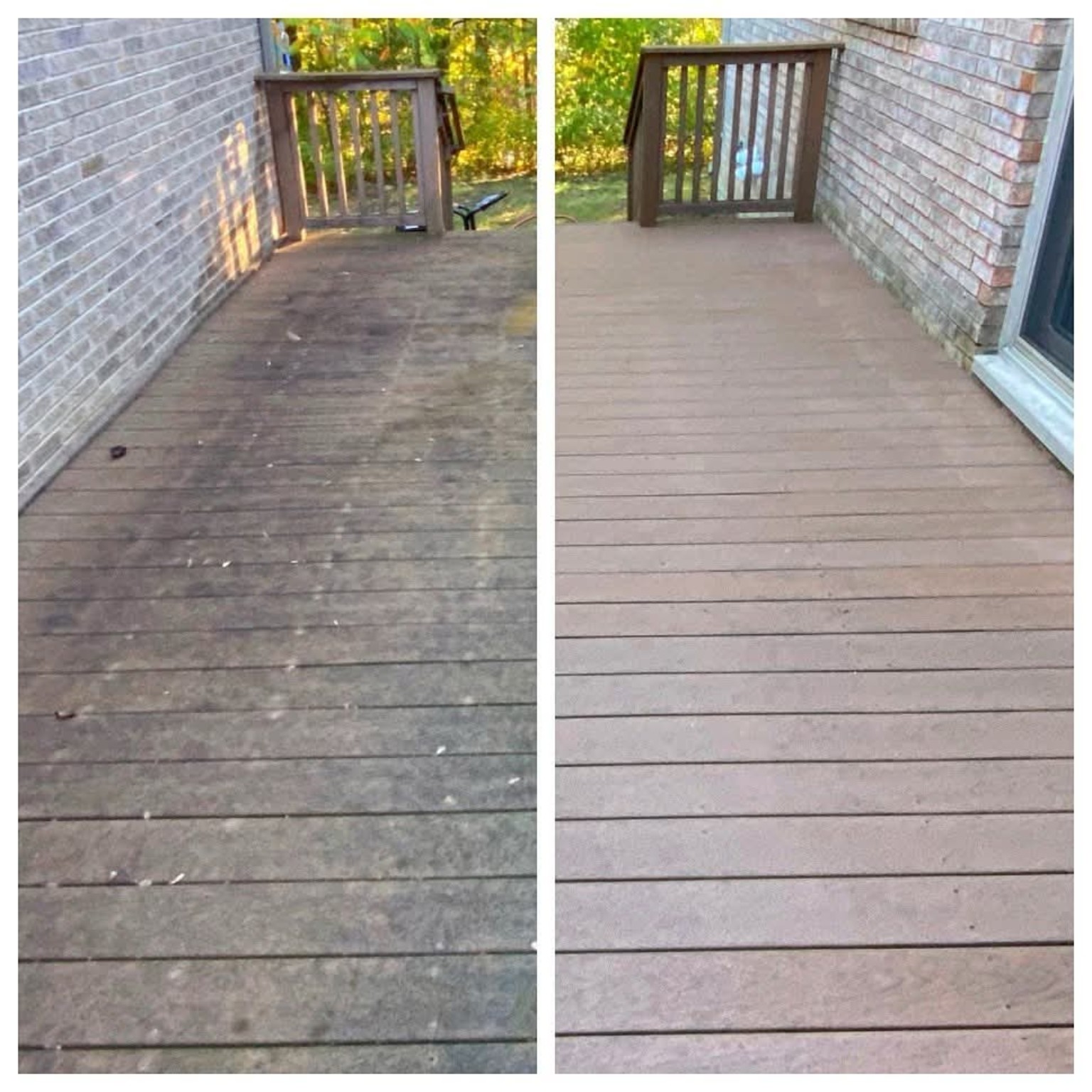
Those patterns suggest more than a little loose dust. Professional pressure washing removes built-up dirt, grime, algae, and organic growth to dramatically improve the appearance of exterior surfaces. It does not change the age, wear, or underlying color of the concrete.
3. A Hose Rinse No Longer Makes Much Difference
A garden hose is useful for washing away fresh sand, loose soil, and grass clippings. When the driveway dries and still looks coated or uneven, the remaining buildup may need more than a rinse.
You might see a persistent gray film across the main parking area or darker dirt lodged in the surface texture. Coastal breezes can carry fine debris onto a driveway, while regular vehicle traffic works dirt into frequently used areas.
Before assuming every mark will wash away, look at its pattern:
- Broad, dull discoloration may be accumulated surface grime.
- Orange marks near sprinkler coverage may be irrigation staining or rust.
- Concentrated dark spots beneath a vehicle may be oil.
Specialty stains, including rust, oil, irrigation staining, paint, and oxidation, are quoted separately. Pointing them out early helps establish realistic expectations for the work.
4. Dirty Edges Keep Returning, and 5. Buildup Hides the Surface
The fourth sign is recurring buildup in the same places. If the driveway edge becomes dirty again quickly after sweeping or rinsing, look nearby. A sprinkler may be soaking it daily, mulch may wash out of a bed, or runoff may collect at the same corner after every storm.
Professional cleaning can remove accumulated grime, but addressing the moisture or debris source matters too. Otherwise, the same conditions remain after the cleaning is finished.
The fifth sign is buildup that makes the surface difficult to assess. A heavy layer of grime can obscure small cracks, worn areas, or uneven transitions. If you cannot clearly distinguish dirt from surface damage, it is worth having the driveway evaluated before choosing a cleaning approach.
Let the cleaner know about existing cracks, coatings, sealers, or loose material. More pressure is not automatically better, and cleaning is not a repair for damaged concrete.
Get a Clear Starting Point for Your Driveway
You do not need to wait until the entire driveway is dark or slippery. A few persistent trouble spots are enough reason to ask what cleaning can reasonably accomplish.
Glass Glow Window Pros is a family-owned, faith-driven company serving St. Petersburg and surrounding Pinellas County communities. Get an instant quote, or call or text to discuss your driveway’s condition, recurring wet areas, and any specialty stains that need separate attention.