A window can look clean from across the room and still have a salty film on the outside. In Clearwater, that film often becomes obvious when afternoon sunlight hits the glass: the view looks softer, glare increases, and streaks appear even though nobody has touched the window.
That is part of living near the Gulf, but it is not something homeowners have to ignore. Understanding how salt reaches your windows—and what happens when it stays there—can help you care for the glass and surrounding materials without reaching for harsh products.
How Gulf Salt Reaches Your Windows
Breaking waves and wind send tiny droplets of seawater into the air. As those droplets travel and dry, they leave salt particles behind on exposed surfaces, including window glass, frames, and metal hardware.
You do not need a beachfront address to notice the effects. Homes farther inland in Clearwater can receive salt carried by coastal winds, although exposure varies with distance from the water, wind direction, nearby buildings, and landscaping.
Even windows on the same house may collect different amounts. A Gulf-facing window can take more wind-driven spray, while a window beneath a deep overhang may receive less direct exposure but also less rinsing from rain.
Common signs of coastal residue include:
- A light haze that becomes more visible in low-angle sunlight.
- A fine, pale deposit after windy weather.
- Smears that return when a damp cloth moves residue around instead of removing it.
- A cloudy exterior view even when the indoor side of the glass is clean.
Appearance alone cannot confirm that a deposit is salt. Pollen, construction dust, and sprinkler overspray can create similar-looking films.
Why Humidity Makes Salt Residue More Troublesome
Salt deposits can attract moisture from humid air. Along Florida’s Gulf Coast, that means residue may repeatedly become damp and dry again rather than remaining a loose powder that simply blows away.
Those cycles help explain why coastal window film can seem stubborn. Salt mixes with airborne dust and other debris, leaving a layer that ordinary rain may only partially remove. A quick wipe can spread that mixture across the glass and leave streaks behind.
The concern is not just the view. Salt and moisture can accelerate corrosion on susceptible metal components, particularly where protective finishes are worn or damaged. White, chalky corrosion on some aluminum surfaces or rust on exposed steel deserves attention. Cleaning removes surface contamination, but it cannot reverse corrosion that has already occurred.
Salt haze also should not be confused with a failed insulated-glass seal. If cloudiness or moisture is between the panes, exterior cleaning will not reach it. That is a reason to have the window evaluated rather than repeatedly trying stronger cleaners.
Rain, Algae, and Irrigation Add Different Problems
Pinellas County’s rainy season changes what lands on windows, but it does not reliably wash them clean. Wind-driven rain can carry debris onto glass, and runoff can move dirt from surrounding surfaces. Sheltered windows may barely get rinsed at all.
Warmth and persistent humidity also encourage algae on damp, shaded exterior surfaces near windows. Green growth on nearby trim or walls is different from salt film on glass and may require a separate cleaning approach suited to that material.
Irrigation adds another variable. Sprinklers that repeatedly hit windows can leave mineral deposits as the water evaporates. Those deposits are not the same as airborne salt, so homeowners should not assume every coastal window mark will come off with routine cleaning.
A few observations help identify the source:
- Residue appearing after strong onshore winds may point to coastal salt exposure.
- Marks concentrated in a sprinkler’s spray pattern suggest irrigation water.
- Green buildup around shaded, damp areas suggests organic growth.
- Haze between panes suggests a window issue rather than exterior dirt.
These clues help guide an assessment; they are not a substitute for inspecting the surface.
Caring for Coastal Windows Without Causing Damage
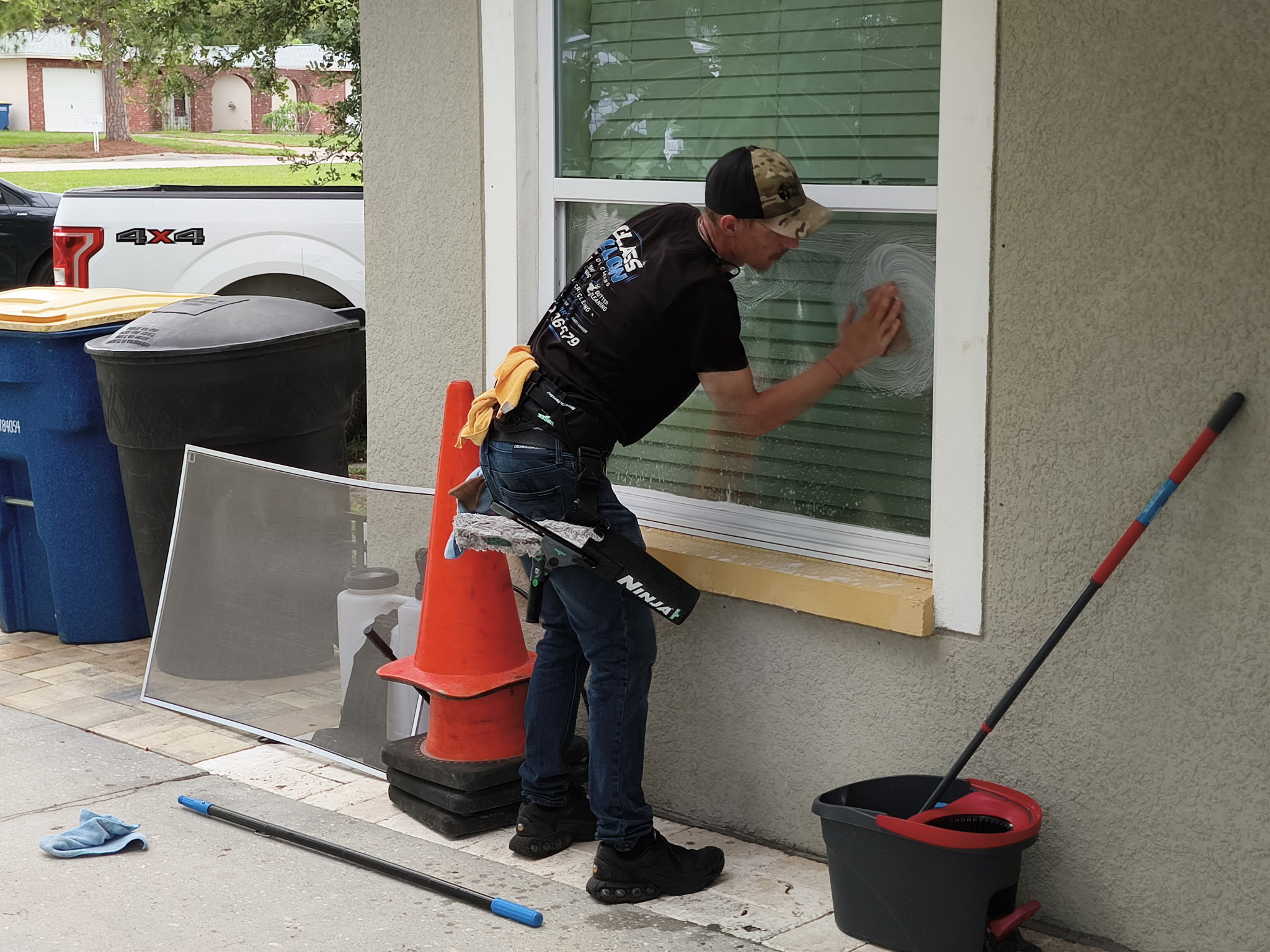
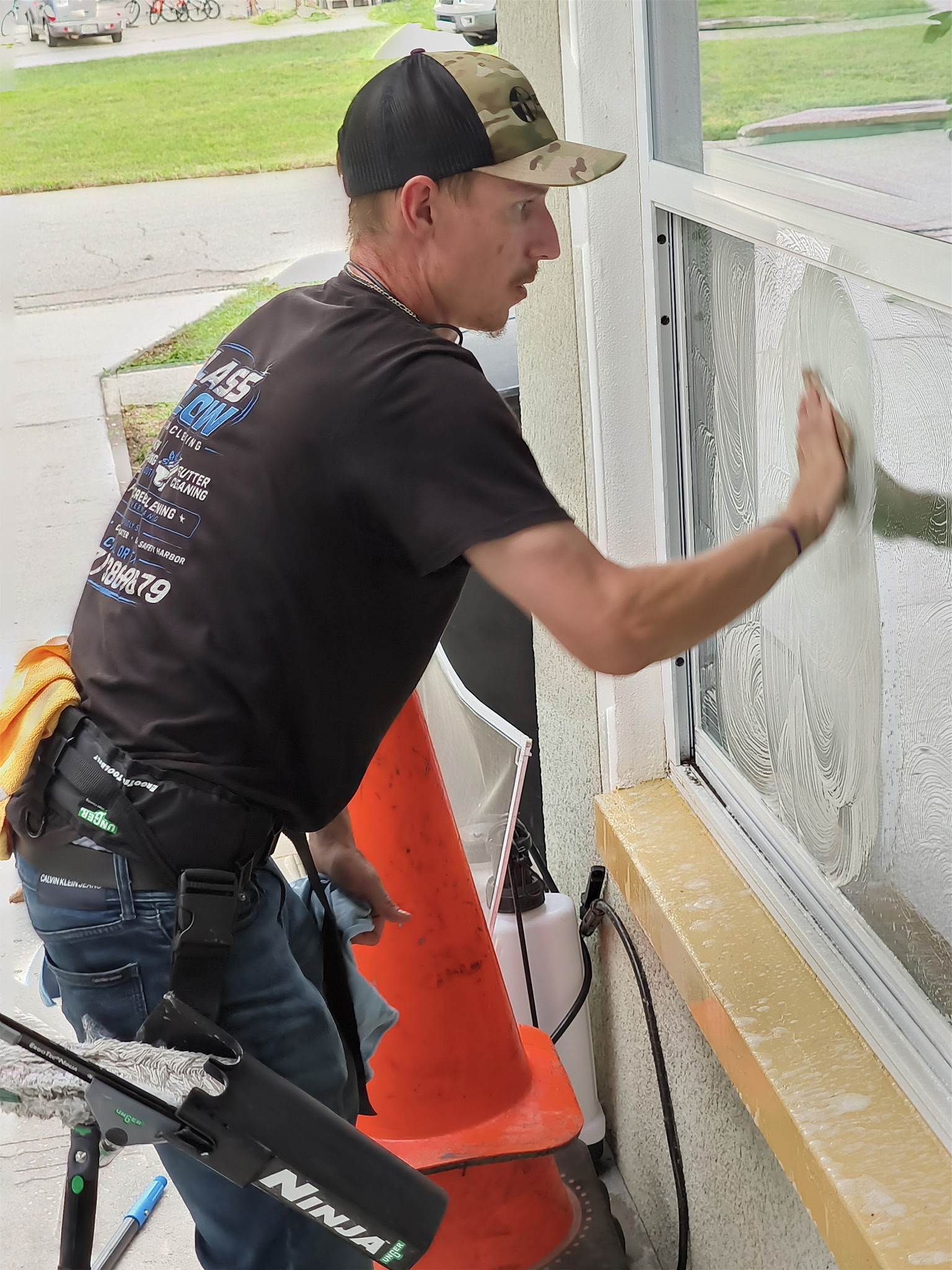
Avoid rubbing dry residue with a towel. Coastal film can contain gritty particles, and dragging those particles across glass may scratch it. Wet cleaning with products and tools appropriate for the window is a safer starting point. Follow the manufacturer’s care instructions, especially for coated or tinted glass.
Keep sprinklers aimed away from windows, and report visible corrosion or damaged finishes before they worsen. Avoid improvising with abrasive pads, acids, or blades to tackle an unidentified deposit. Stronger is not automatically safer.
At Glass Glow Window Pros, our family-owned team helps Clearwater homeowners address exterior buildup with an honest assessment of what cleaning can accomplish. Specialty stains, including rust, oil, irrigation staining, paint, and oxidation, are quoted separately.
If salt haze is dulling your view, get an instant quote or call or text Glass Glow Window Pros. We can help you understand what is on your windows and choose a practical next step.