A driveway rarely gets dirty all at once. You notice a darker strip beside the lawn, a green patch near the garage, or a spot that stays slick after the afternoon rain. Over time, those small changes can make the whole entrance look neglected.
For homeowners in St. Petersburg, the weather gives that buildup plenty of help. Humidity, frequent summer rain, windblown debris, and overspray from irrigation all contribute. Salt air is part of Gulf Coast life, too, but a dark driveway should not automatically be blamed on salt. Moisture, organic growth, and ordinary tracked-in dirt are often more useful clues.
Here are five signs worth checking before you decide whether another rinse with the garden hose will do.
Signs 1 and 2: Green Growth and Slippery Patches
1. Green or dark patches keep spreading.
Look along the lawn edge, beneath parked vehicles, and in areas shaded by palms, fences, or the house. Green films and irregular dark patches may indicate algae or other organic growth, especially where the concrete stays damp.
In Pinellas County, warm temperatures and humidity give that growth a long season. During the rainy months, a shaded driveway may get wet again before it has fully dried. Sprinklers hitting the same edge several mornings a week can add to the problem.
A useful clue is the pattern: if discoloration follows the dampest, shadiest parts of the driveway rather than appearing evenly across it, moisture-related buildup deserves attention.
2. The surface feels slick when wet.
If you have noticed your shoes slipping while taking out the trash or walking to the car after rain, do not dismiss it as ordinary wet concrete. A film of algae or accumulated grime can contribute to slippery footing.
Pay particular attention to:
- The slope near the garage or sidewalk
- Shaded spots beside landscaping
- Areas regularly soaked by sprinklers
- Low sections where rainwater lingers
Avoid deliberately testing a slippery patch with your feet. Visible growth and a previous slip are enough reason to have it assessed. Cleaning can remove contributing buildup, but persistent puddles may also point to a drainage issue that washing will not fix.
Signs 3 and 4: Runoff Trails and a Rinse That No Longer Helps
3. Rain leaves dark trails instead of a cleaner driveway.
St. Petersburg thunderstorms can move soil, leaf fragments, and lawn debris across concrete. When the water drains away, it may leave streaks along its path or a dirty band near the street.
Watch what remains after the driveway dries. Recurring trails, grime around low spots, and dark outlines beneath accumulated leaves suggest that debris is settling into the surface rather than simply washing away.
Clearing leaves and trimming back overhanging plants can help reduce fresh buildup. However, once grime and organic material are established, rainfall is not a substitute for cleaning.
4. Sweeping and a garden-hose rinse make little difference.
Sweeping is useful for loose sand, grass clippings, and leaves. A hose can carry away fresh dirt. Neither necessarily removes a film that has built up over months of damp weather and everyday use.
If the driveway still looks uniformly dingy after loose debris is gone, professional cleaning may be the next practical step. Another clue is a clear contrast between exposed areas and a protected section that has stayed relatively clean.
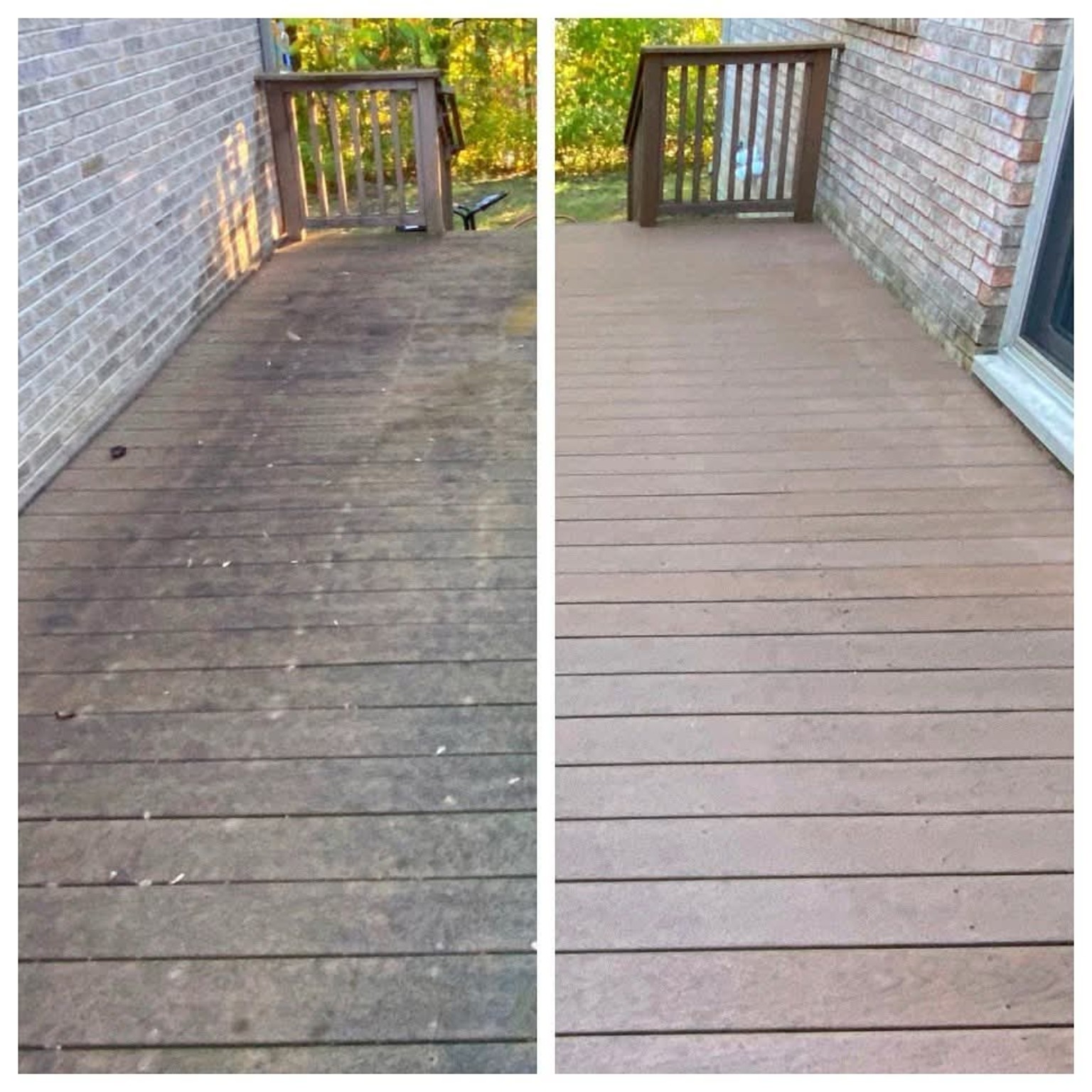
Professional pressure washing removes built-up dirt, grime, algae and organic growth to dramatically improve the appearance of exterior surfaces. It does not reverse wear, repair cracks, or guarantee a particular concrete color. Older concrete, previous repairs, and differences in the surface itself may remain visible afterward.
Sign 5: Sprinkler-Side Discoloration Is Becoming More Noticeable
5. Orange or brown marks trace the irrigation spray pattern.
Some St. Petersburg driveways develop discoloration where irrigation water repeatedly lands. Depending on the water source and mineral content, those marks may be irrigation staining rather than ordinary dirt or algae.
This is a sign to ask for a professional assessment, not to assume stronger pressure is the answer. Different stains require different treatment decisions.
When requesting a quote, mention:
- Orange or rusty-looking sprinkler marks
- Oil spots where vehicles park
- Paint, oxidation, or other unusual discoloration
Specialty stains, including rust, oil, irrigation staining, paint, and oxidation, are quoted separately. Pointing them out early helps keep expectations clear. Redirecting sprinkler heads may also help limit recurring overspray after cleaning.
Get a Clear Answer for Your Driveway
You do not need to wait until every sign appears. Spreading growth, slick areas, or grime that survives routine upkeep can be enough reason to ask for help.
Glass Glow Window Pros is a family-owned, faith-driven company serving St. Petersburg and surrounding Pinellas County communities. Get an instant quote, or call or text to discuss your driveway’s condition and any specialty stains that need separate attention.