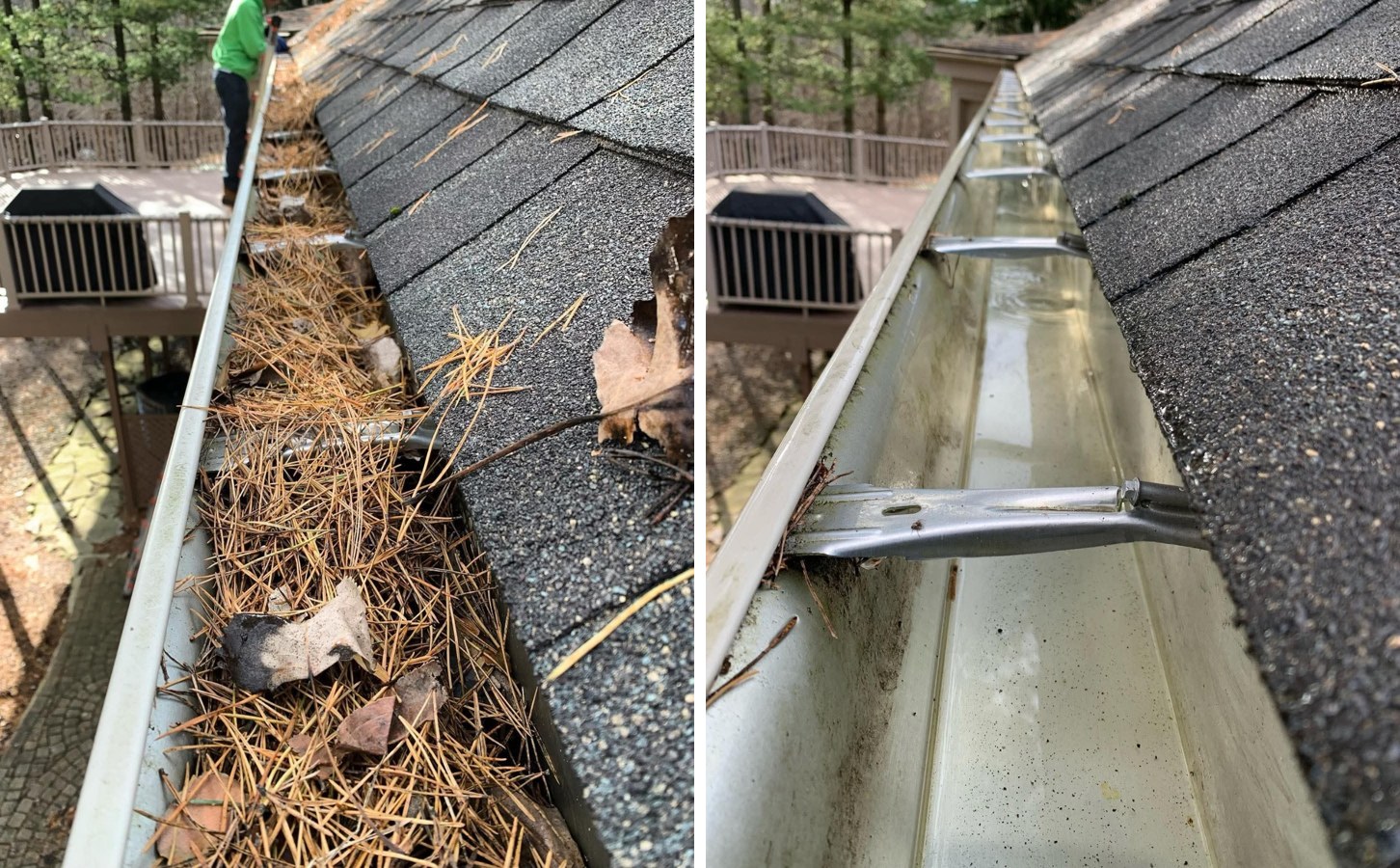

In Pinellas County, getting ready for fall does not mean putting away the rain gear. September can still bring soaking afternoon storms, and Atlantic hurricane season continues through November. While homeowners farther north wait for autumn leaves to drop, Gulf Coast homeowners have a different reason to check their gutters: months of summer rain and accumulated debris.
Leaves, twigs, palm material, and roof grit can collect throughout the year. By late summer, that buildup may already be slowing drainage. Cleaning gutters before fall helps roof runoff move toward its intended outlet rather than spilling over the edge beside your home.
For homeowners from St. Petersburg to Palm Harbor, this is a practical maintenance task worth scheduling before the next stretch of unsettled weather.
Fall Is Still Wet Weather on Florida’s Gulf Coast
Florida does not follow the familiar pattern of summer ending and dry fall weather arriving right on schedule. The rainy season often extends into early fall, and tropical weather can deliver prolonged rainfall even when a storm does not make landfall nearby.
Your roof collects water across a large surface area and sends it toward relatively narrow gutters and downspouts. When debris restricts those passages, water can back up or spill over. Even a clean system may overflow during exceptionally intense rainfall, but a clogged outlet makes problems more likely during ordinary storms, too.
Many Pinellas County yards also have mature trees close to the roofline. Live oaks shed leaves heavily in spring, while summer thunderstorms knock down smaller branches and other debris. You do not need a traditional fall leaf drop to end up with clogged gutters.
A late-summer check gives you time to address drainage problems before another round of heavy rain, rather than trying to arrange maintenance while storms are approaching.
Humidity and Salt Air Add to the Maintenance Load
Our humid climate means trapped gutter debris can stay damp, especially beneath shaded tree cover. Wet leaves and sediment can form a compact layer around outlets, making it harder for water to drain freely. Persistent moisture also supports algae and other organic growth on nearby exterior surfaces.
Green streaks beneath a gutter are not proof of a blockage, but they are worth investigating. They may point to recurring overflow, a leaking joint, or another source of moisture.
Salt air adds a separate concern, particularly for homes closer to the Gulf or Intracoastal Waterway. Salt exposure can accelerate corrosion on susceptible metal components. Cleaning does not repair corrosion, but removing debris makes it easier to spot deteriorating fasteners, seams, and brackets.
Irrigation water matters at ground level as well. A sprinkler that repeatedly wets the same area where a downspout discharges can keep soil damp between storms. If that corner of the house never seems to dry, check both the irrigation coverage and the roof drainage instead of assuming the gutter is the only cause.
What to Check Before the Next Heavy Rain
Start with a ground-level inspection on a dry day. Look along the roof edge and around each downspout. You may be able to identify trouble without climbing a ladder.
Watch for:
- Plants or packed debris visible above the gutter edge.
- Sagging sections, separated joints, or loose-looking brackets.
- Water marks on fascia or exterior walls beneath the gutters.
- Washed-out mulch or soil directly below a roof edge.
- Downspout outlets blocked by leaves, landscaping, or stored items.
- Puddles near the house that linger after rainfall.
If you observe drainage during rain, stay safely indoors or under secure shelter. Never inspect gutters outside during lightning or climb a wet ladder.
A thorough gutter cleaning should address both the gutter channels and the downspouts. Scooping leaves out of the top will not solve a blockage farther down the system. Checking water flow afterward can help reveal remaining obstructions or leaks.
Cleaning also has limits. Incorrect gutter slope, undersized components, damaged fascia, or poorly placed discharge points may need repair or evaluation by a qualified gutter professional. Clearing debris cannot correct every drainage problem.
Build a Schedule Around Your Yard, Not Northern Seasons
There is no single cleaning schedule that fits every Pinellas County home. A house beneath several mature oaks may need attention more often than one with an open roofline and little nearby vegetation.
Use these checkpoints to build a practical routine:
- Inspect before the summer rainy season gets underway.
- Check again in late summer, before fall tropical weather.
- Look for new debris after strong winds, once conditions are safe.
- Recheck known trouble spots whenever overflow returns.
Gutter guards can reduce some debris entry, but they do not eliminate maintenance. Small particles can still accumulate, and material can collect on top of the guards.
For tall rooflines, awkward access, or work near electrical lines, leave the inspection and cleaning to a properly equipped professional.
Get Help Planning Your Exterior Maintenance
At Glass Glow Window Pros, we believe good home maintenance starts with clear expectations and timely attention. Before fall, check your gutters and drainage, then plan any exterior cleaning around the issues you find.
Call or text our family-owned team to discuss your exterior cleaning needs, or get an instant quote for window cleaning and pressure washing. We are happy to clarify service scope so you can plan the right next step for your home.